I am about to start telling people Orbit2D exists, which meant looking at the front page as a
stranger rather than as the person who wrote it. Two things were true at once: there was plenty of
information on it, and it did not answer the four questions someone actually arrives with. This
release is that page rebuilt, plus the unglamorous search and machine-readability work that should
have happened before any advertising, not after.
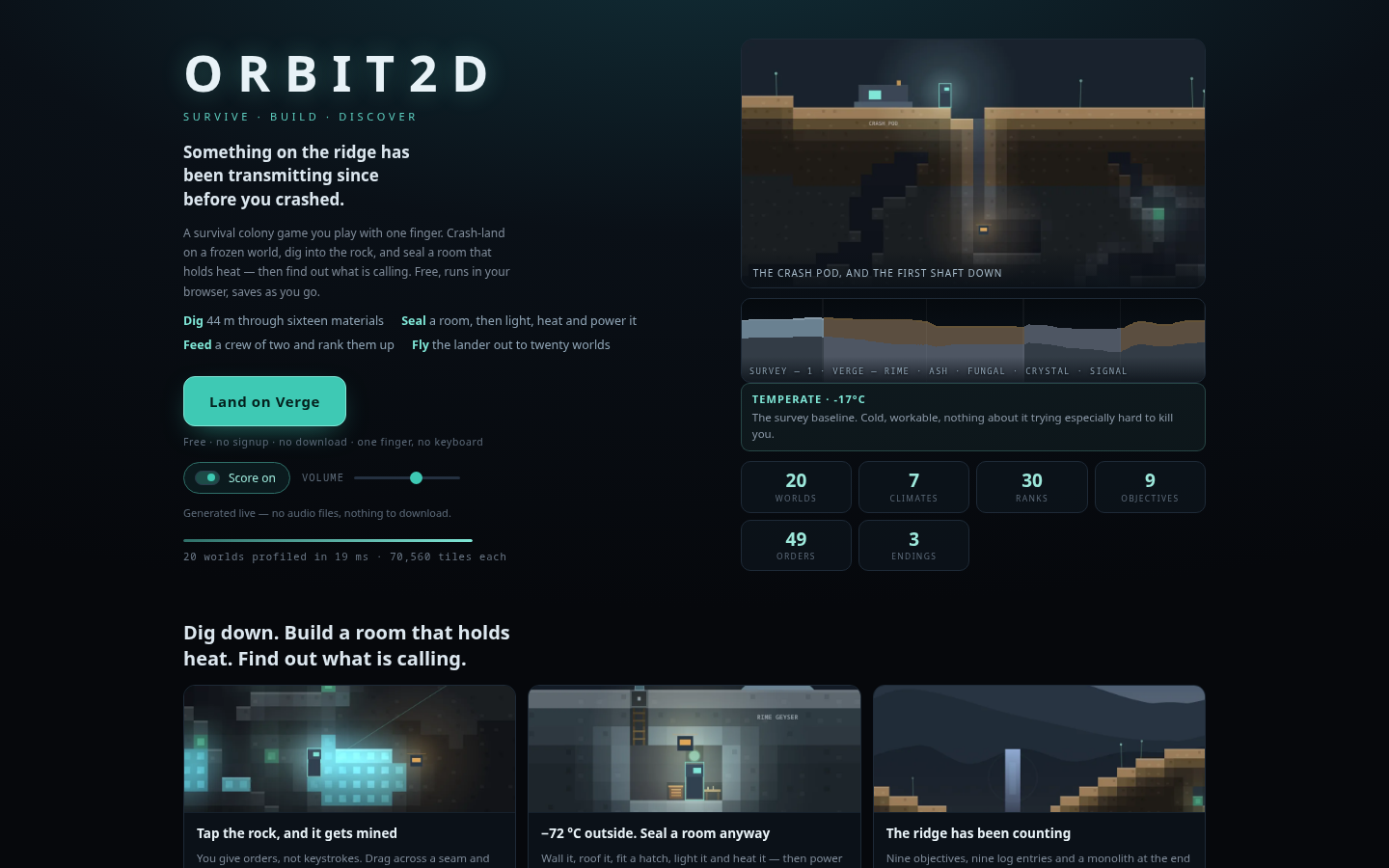
The hero was a paragraph where it needed to be a promise
The old opening was a hundred-word block that described every system in the game in one breath:
digging, sealing, heating, powering, growing, cooking, ranks, talents, standing orders, objectives,
log entries, endings. Everything in it was true. Nobody reads it.
It is now a hook, three short sentences, and four lines you can take in without reading them
properly:
- Dig 44 m through sixteen materials
- Seal a room, then light, heat and power it
- Feed a crew of two and rank them up
- Fly the lander out to twenty worlds
The detail did not get deleted, it got moved down the page to where someone who is already
interested will find it. The button is still the first thing your eye lands on, and it is still one
tap from playing — no separate marketing page, no click between arriving and landing on a world.
That was the one thing I was not willing to trade for search rankings.
A FAQ, because the same questions keep arriving
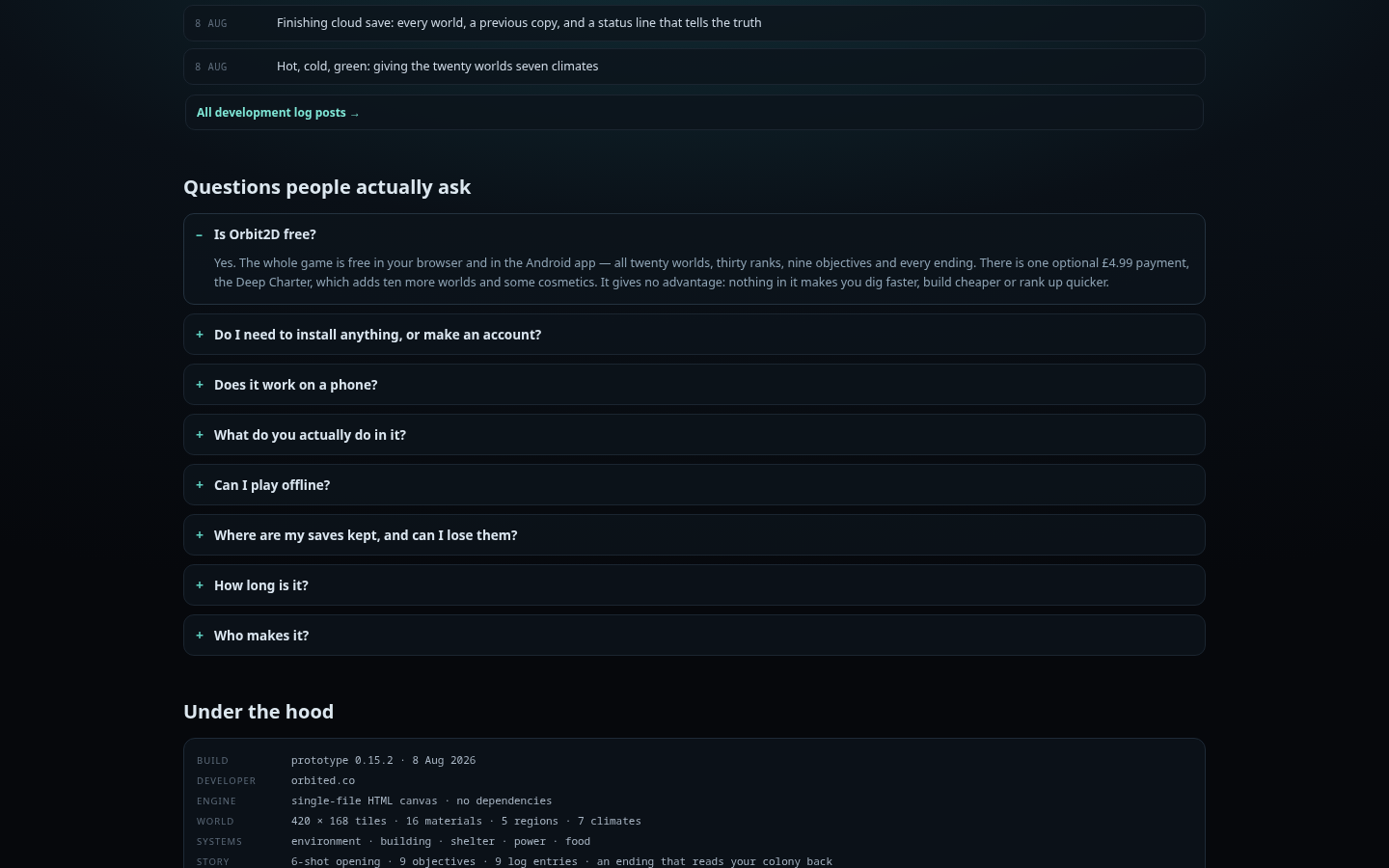
Eight questions, answered plainly: is it free, do I need an account, does it work on a phone, what
do I actually do, can I play offline, where are my saves kept, how long is it, who makes it. Every
one of those has been asked through the feedback box or in a thread somewhere, and every one was
previously answered somewhere on the page in a sentence you had to go looking for.
The answer to “is it free” is worth repeating here, because it is the one people are most
suspicious of: the whole game is free — all twenty worlds, thirty ranks, nine objectives, every
ending. There is one optional £4.99 payment that adds ten more worlds and some cosmetics, and
it deliberately gives no advantage. Nothing in it makes you dig faster, build cheaper or rank up
quicker.
The part nobody sees
Orbit2D is one HTML file that paints itself onto a canvas, which is lovely to work on and
historically awkward for anything that reads a page without running it. Several things were quietly
wrong:
- The structured data still described version 0.7.3. That is eight releases stale.
It is now generated from the same constant the game uses, so it cannot drift again. - The specification table — build, world size, materials, regions, climates, ranks, unlocks —
was filled in by JavaScript, so anything that did not run scripts saw a column of em-dashes. Those
numbers are now baked into the markup by a script that boots the real game headless and copies
out what the game itself wrote. The page cannot claim a number the code disagrees with. - That immediately caught two wrong numbers I had been repeating: the world has sixteen materials
now, not fifteen, and there are forty-nine standing orders, not thirty-six. Both had grown past the
copy. - The staging copy of the game at
/lab/env/is byte-identical to the live one, so it
was a duplicate of the most important page on the site. It is now excluded from crawling. - The download page said the app was 894 KB. It is 952 KB.
On top of that: proper FAQ and organisation structured data, a page-level description that links
the game, the studio and this log together as one entity, a refreshed sitemap, and an
llms.txt — a plain-text summary of what Orbit2D is, what it costs, what it needs and
what it does not collect, written for the tools that increasingly answer “what is this game?” on
someone’s behalf. If a model is going to describe my game to a stranger, I would rather it read my
description than guess from a canvas element.
And a page about everything else
There is now a short page about the other things I have
built. Orbit2D is not my first project, and the honest version of that list is: a run of small
web products shipped alone over several years — a game intelligence API, a guides and AI platform
across a dozen subdomains, a tax-receipt app, a beer-price site — most of which were shut down in
July 2026. Their source is published openly rather than quietly deleted, with the keys stripped
out. They are archives, not products, and the page says so.
It exists because “who made this?” is a fair question to ask before you trust a save file to
someone, and because the answer to it is one person in Ipswich rather than a studio.
Where to get it
Version 0.15.2 is live at orbit2d.co — free, no sign-in, and it
saves as you play. The Android build is the same version on the
download page. Nothing in this release changes the game
itself: no world, save or rank is affected. It is the first one aimed entirely at the people who
have not played it yet.
Leave a Reply